
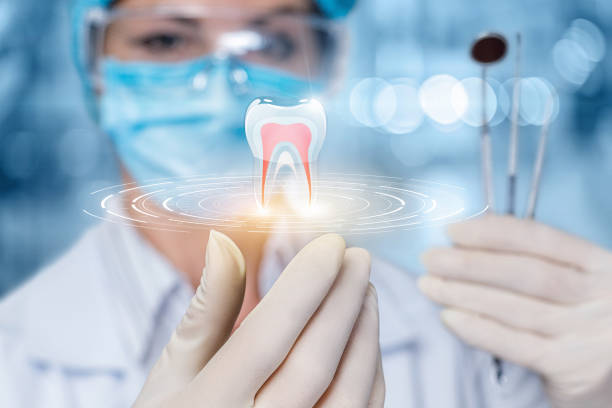
Digital dentistry is revolutionizing the way we do dentistry. It allows us to access more accurate and comprehensive information about our oral health, enabling us to make better-informed decisions on how to treat our teeth and gums. From 3D imaging and computer-aided design (CAD) technology to digital X-rays, this new technology is reshaping the industry by offering dental professionals a more efficient and effective way of diagnosing and treating patients. Let’s take a look at how digital dentistry is making its presence felt in the field of oral healthcare.
Digital Imaging Technology
Digital imaging technology has revolutionized dental care by allowing dental professionals to capture images of teeth and gums with greater accuracy than ever before. This technology can be used to detect small cavities or other changes in oral structure that may have gone unnoticed without it. Additionally, with digital imaging, images can be shared instantly with colleagues for additional opinions or further treatments if necessary.
3D Imaging
3D imaging is another form of digital dentistry that allows dentists to get an even more detailed view of the mouth than traditional 2D images could provide. This technology uses high-resolution images from multiple angles which can then be manipulated in order to create intricate 3D models of teeth and gums. With 3D imaging, dentists can diagnose problems quickly and accurately as well as plan complex treatments such as implant placements with much greater precision than ever before.
Computer-Aided Design (CAD) Technology
Computer-aided design (CAD) technology has revolutionized the process of designing prosthetics such as crowns and bridges. With CAD technology, dentists can quickly scan a patient’s mouth using 3D imaging technology and then use CAD software to design a custom prosthetic that perfectly fits the patient’s mouth shape and size. This makes it much easier for dentists to provide patients with comfortable and aesthetically pleasing prosthetics that are tailored specifically for them.
Digital X-Rays
Finally, digital X-rays allow dental professionals to quickly capture detailed images of teeth that reveal any underlying issues that may not be visible in traditional X-rays or physical examinations alone. Digital X-rays provide a more accurate assessment of a patient’s condition which helps ensure that any treatment provided will be effective in addressing their needs. Additionally, digital X-rays also allow for better communication between patients and their dental professional because they can easily share images with each other online instead of having to wait for physical copies of images or films to arrive by mail or courier service.
Conclusion: Digital dentistry has changed the way we approach oral healthcare by providing us with more accurate information about our teeth and gums than ever before while also making it easier for dental professionals to communicate with each other regarding treatments plans or diagnoses. From 3D imaging systems to computer aided design (CAD) software, these new technologies are revolutionizing how we practice dentistry today, allowing us to provide better caries detection services as well as improved prosthetic designs tailored specifically for each individual patient’s needs. In short, there is no denying the impact that digital technologies have had on the field of dental medicine – one that will continue into the future as more advanced technologies become available!