Categories
Uncategorized

All You Need to Know about Azure Partner Factors

Azure Arc set to be announced at Microsoft Ignite conference - Cloud7 News

Azure is a comprehensive cloud computing platform offering a wide range of services, including those for computing, analytics, storage, and networking. Working with an Azure partner can help you take advantage of all that Azure has to offer, but not all partners are created equal. So, how do you know which one is right for your business?


Here are some factors to consider.


Compatibility

One of the first things you should consider when choosing an Azure partner is compatibility. Not all Azure partners work with all versions of Azure, so it’s important to make sure that the partner you’re considering is compatible with the version you’re using. You should also consider whether or not the partner offers support for hybrid deployments, as these can be helpful in certain situations.


Cost

Of course, the cost is always a factor when choosing a partner. Be sure to get quotes from multiple partners so that you can compare pricing and find the best deal. It’s important to remember that the lowest price isn’t always the best value, though; be sure to consider the other factors on this list before making your final decision.


Expertise

Another important consideration is expertise. When you’re working with an Azure partner, you want to be confident that they know what they’re doing. After all, you’re entrusting them with a crucial part of your business. Be sure to ask about their experience level and technical expertise to be sure they’re up to the task.


5 Tips for Choosing an Azure Partner


  1. Do your research

The first step in choosing an Azure partner is to do your research. There are a variety of ways to research potential partners, including online forums, customer reviews, and industry publications. Once you have a list of potential partners, take the time to learn about their services and pricing models.


  1. Consider your needs

When choosing an Azure partner, it is important to consider your specific needs. What type of workloads do you need to run on Azure? What kind of support do you need? What is your budget? Answering these questions will help you narrow down your list of potential partners.


  1. Check for certifications

When researching potential Azure partners, be sure to check for Microsoft certifications. These certifications indicate that a partner has the necessary skills and knowledge to provide quality services.


  1. Ask for references

Another important step in choosing an Azure partner is to ask for references. A good partner should be able to provide you with a list of satisfied customers who can attest to their quality of service.


  1. Compare pricing models

When considering an Azure partner, be sure to compare pricing models. Some partners charge by the hour, while others charge a flat rate per project. There is no right or wrong answer when it comes to pricing, but you should choose a model that fits your budget and needs.


Conclusion:

Choosing an Azure partner is a big decision—one that shouldn’t be taken lightly. By considering factors such as compatibility, cost, and expertise, you can be sure you’re making the best choice for your business. With the right partner by your side, you can take full advantage of everything Azure has to offer.

Categories
Uncategorized

Cloud Computing with Azure- Preparing for Success

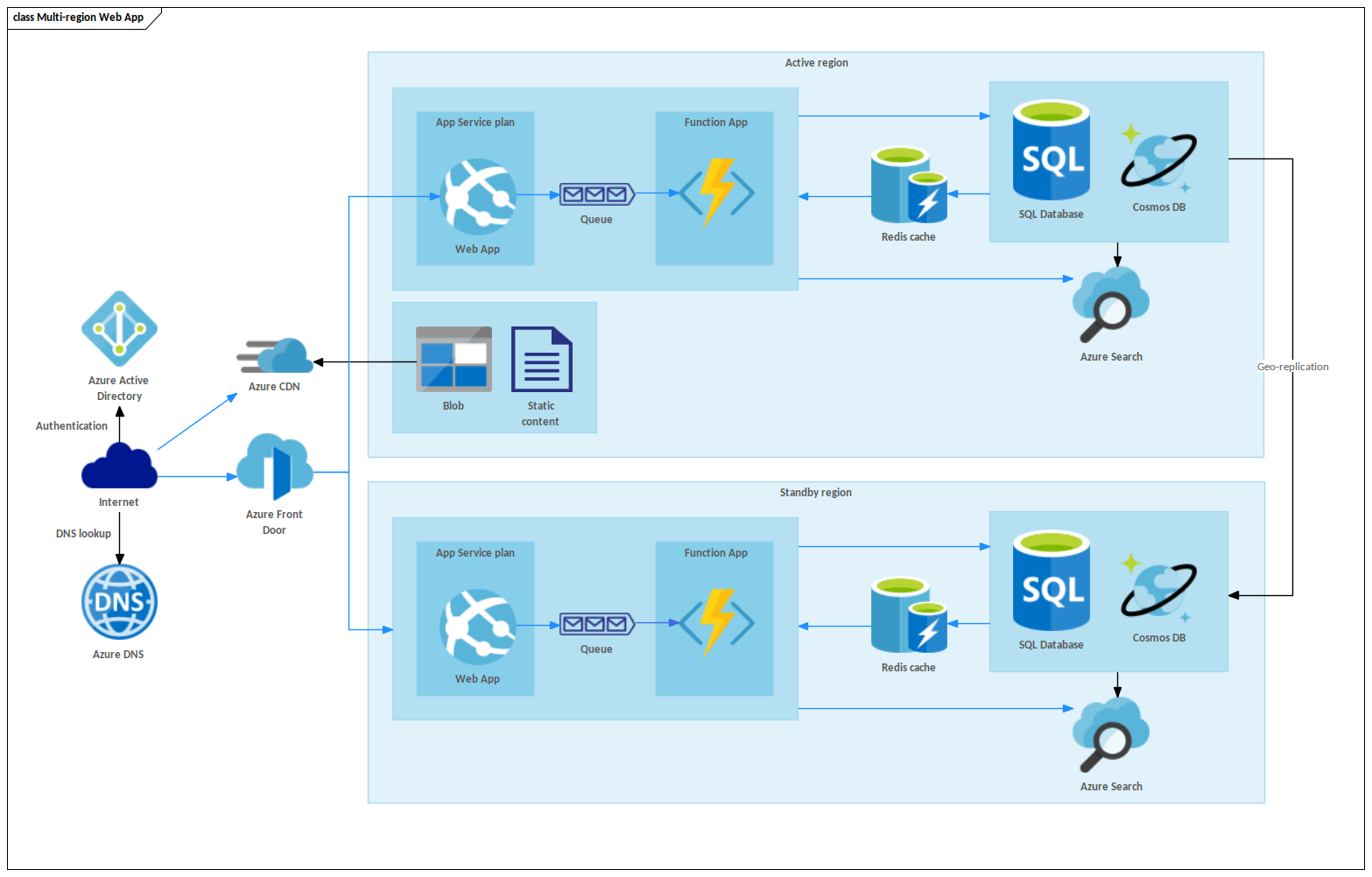
Microsoft Azure Example - Multi-region Web App | Enterprise Architect  Diagrams Gallery

Many businesses are making the switch to cloud-based systems and infrastructures. Cloud aws support plans has a number of advantages over traditional, on-premise systems. It can be more cost-effective, flexible, and scalable. When done right, migrating to the cloud can give your business a real competitive edge.

However, not all cloud providers are created equal. In this blog post, we’ll take a look at why Azure is the best choice for businesses looking to make the switch to the cloud. We’ll also provide some tips on how to prepare for success when migrating your business to Azure.

What is Azure?

Microsoft Azure is a cloud computing service that provides businesses with access to a variety of different types of resources, including virtual machines, storage accounts, and databases. Azure also offers various tools and services that can help businesses with tasks such as monitoring and managing their resources, developing and deploying applications, and managing identity and access.

Why Choose Azure?

There are many reasons why you should choose Azure as your business’s cloud provider. Here are just a few:

-Azure is more cost-effective than other providers: You only pay for the resources you use with Azure, which can help save your business money.

-Azure is flexible: You can easily scale up or down as your needs change, which gives you the flexibility to grow your business without having to worry about exceeding your budget.

-Azure is reliable: With an uptime of 99.95%, you can rest assured that your business’s critical applications will always be available when you need them.

Preparing for Success

When migrating your business to Azure, it’s important to take the time to prepare for success. Here are a few tips:

-Educate yourself and your team: Make sure you understand what Azure is and what it can do for your business before you make the switch. It’s also important to ensure that everyone on your team is on board with the decision and knows what they need to do to make it happen.

-Create a plan: Migrating to Azure doesn’t have to be complicated or time-consuming if you have a plan in place. Take some time to map out what you want to achieve and how you’re going to get there. This will help ensure that everything goes smoothly on migration day.

-Get help from experts: There’s no shame in admitting that you need help when it comes to something as important as migrating your business to the cloud. Work with a team of experts who have experience migrating businesses like yours to Azure so that you can be sure everything is done right.

In the end

Migrating your business’s infrastructure to the cloud can be a daunting task, but it doesn’t have to be if you’re prepared! With Microsoft Azure, you’ll have access to all the resources and tools you need to make the transition seamlessly and set your business up for success in the future! Now that we’ve gone over some of the basics of Microsoft Azure, stay tuned for our next blog post where we’ll take an even closer look at all that this powerful platform has to offer!

Categories
Uncategorized

Top 10 healthy Frozen Food Options

8 Healthy Frozen Foods You Must Try | The Times of India

Frozen food are a convenient and easy option for busy families. They offer a quick and easy way to get a nutritious meal on the table. However, frozen foods can be high in sodium and calories, so it is important to choose healthy options.

Frozen vegetables are a healthy and convenient option. They can be added to soups, stews, and casseroles, or simply cooked and served as a side dish. Frozen vegetables have less sodium than canned vegetables.

When you think of frozen food, you might not think of them as being particularly healthy. However, there are actually a lot of healthy frozen foods that you can eat! Here are 10 of the healthiest frozen foods to eat:

  1. Frozen fruits and vegetables. Frozen fruits and vegetables are just as healthy as fresh ones, and sometimes even more so because they are picked at the peak of ripeness and then frozen immediately. This means that they retain more of their nutrients than fresh fruits and vegetables that have been sitting around for a while.
  2. Frozen fish. Fish is a great source of protein and omega-3 fatty acids, and it’s even better when it’s frozen because it lasts longer. Frozen fish is also a great convenience food because you can just pop it in the oven or microwave and have a healthy meal in minutes.
  3. Frozen meat. Just like with fish, frozen meat is a great convenience food. It’s also a good way to make sure you’re getting high-quality meat because it’s usually frozen soon after it’s been slaughtered.
  4. Frozen tofu. Tofu is a great source of protein for vegetarians and vegans, and it’s also very versatile. You can use it in stir-fries, soups, salads, and more. Frozen tofu is especially convenient because it doesn’t need to be thawed before you use it.
  5. Frozen pizza. Yes, really! Frozen pizza can actually be a healthy meal if you choose the right kind. Look for pizzas with whole wheat crusts and plenty of vegetables.
  6. Frozen yogurt. Frozen yoghurt is an excellent substitute for ice cream. It’s lower in calories and fat, and it usually has live and active cultures, which are good for your gut.
  7. Frozen meals. There are a lot of healthy frozen meals available these days. Just make sure to read the nutrition label carefully to make sure you’re choosing a healthy option.
  8. Frozen fruit bars. These are a great healthy snack or dessert. Most fruit bars are made with real fruit and they’re a good source of fibre.
  9. Frozen veggies burgers. These are an excellent substitute for traditional burgers. They’re usually made with a mix of vegetables and grains, and they’re usually pretty low in calories.
  10. Frozen edamame. Edamame are young soybeans that are a great source of protein and fiber. They’re also a good source of vitamins and minerals. Most grocery stores have them in the frozen section.

These are just 10 of the many healthy frozen food that you can eat. So next time you’re at the grocery store, don’t be afraid to stock up on some frozen food!

Categories
Uncategorized

Audit Apps for Lean Implementation

Free Online Checklist Maker - Venngage

Audit apps help companies measure performance by allowing employees to complete audits from anywhere at any time. They can capture data, take pictures, sign documents, and even get directions using GPS. They allow organizations to standardize their procedures and prevent downtime.

The Audit app like iauditor not only gives the user with an immediate report of their audit, but it also collects data that is gathered through audits. In addition, users are given the ability to amend forms and upload photographs. In addition to that, you can use the app to communicate specific work instructions to employees who are out in the field. In addition, the information that is input into the application remains permanently searchable and can be accessed for use in the future.

You’ve read about Lean implementation, and you’re ready to get started. But where do you start?The first step is to identify the different types of audit apps available, so that you can find the ones that are right for your organization.

If you already know what kind of audit software you want to use, skip ahead! If not, here are some helpful tips:

First, understand the difference between software that focuses on lean manufacturing processes versus software that focuses on lean project management processes. While they both help improve efficiency and reduce waste in a company workflow, they work differently.

Next, consider your company’s needs and goals. Do they want to improve their overall output or reduce costs by streamlining their supply chain? Or do they have specific goals like improving quality control or reducing inventory levels? You’ll need to find an app that can cater to these specific needs.

Finally, make sure any audit apps are compatible with your existing technology infrastructure before making any purchases!

Try to find a tool that has a simple interface. Because you want something that can be utilised by employees at all levels of the business, it needs to be straightforward enough that even non-technical people can comprehend it.

The elimination of waste is at the heart of lean implementation. This indicates that you ought to be searching for ways to cut down on the amount of time spent on activities that don’t immediately contribute to your bottom line in order to maximise your profitability. If you’re not sure where to start, here are some tips:

– Identify the most common tasks your employees perform and see if there’s an app that can automate them.

– Try using a time tracking app to see if any of your employees are taking longer than they should be on a given task.

– Consider setting up an employee performance review system so that you can track their productivity over time and identify areas where they might need improvement.

Find a tool that can be adapted to suit your requirements without requiring you to work with a specialist in information technology or a programmer. Because of this, you won’t have to spend time training new staff members or having them learn how software works from beginning just so they can use it correctly! This will save you time and money in the long run!

Categories
Uncategorized

5 Common AWS support Issues & How to Resolve Them

How to Deploy Neo4j on Microsoft Azure, a Step-by-Step Guide [Azure Series,  Part II]

As a growing number of businesses adopt Azure as their cloud platform of choice, they are inevitably going to run into some common support issues. While Azure is a very reliable and robust platform, there are still some pain points that users need to be aware of. In this blog post, we will troubleshoot 5 of the most common AWS support issues.


1. VM Creation Fails or Takes too Long

If you’re trying to create a new VM in Azure and the process is taking too long or failing altogether, the first thing you should check is your subscription quota. Each Azure subscription has certain limits on the number of resources that can be created. If you have reached your limit, you will need to increase your quota before you can continue. You can do this by opening a support ticket with Microsoft Azure.


2. Cannot Connect to VM After Creation

If you are able to create a VM but cannot connect to it, the most likely cause is a network security group (NSG) rule blocking port 3389, which is the port used for RDP connections. To resolve this issue, open the NSG for the VM in question and add an inbound rule allowing traffic on port 3389 from your IP address.


3. Resource Deployment Fails in ARM Template

If you’re deploying resources via an ARM template and the deployment fails, the first thing you should do is check the deployment logs in Azure Portal. These logs will often contain helpful information about what went wrong and how to fix it.


4. Slow Network Performance

If you’re noticing slow network performance when connecting to an Azure VM, one possible explanation is that your VM is located in a different region than your client’s computer. Try connecting to a different region and see if that improves performance. If not, try creating a point-to-site VPN connection directly to your VM. This will route all traffic through the VPN gateway, which may improve performance depending on your network configuration.


5. App Service Worker Role Stuck in Stopping State

If you have an App Service worker role that’s stuck in the “stopping” state, it could be due to website files still being in use by IIS worker processes. To resolve this issue, recycle the App Service app pool from within Azure Portal. This will kill all existing IIS worker processes and allow the worker role to stop successfully.


Overall, the key to troubleshooting AWS support issues is to gather as much information as possible and then follow a systematic approach to finding a resolution. And don’t forget that Microsoft offers 24/7 technical support for Azure, so if you are unable to resolve the issue on your own, reach out to their support team for assistance.


Conclusion:

While Microsoft Azure is a very reliable cloud platform, there are still some common support issues that users need to be aware of. In this blog post, we have troubleshot 5 of the most common issues: VM creation failures or taking too long, inability to connect to VM after creation, resource deployment failures in ARM template, slow network performance, and App Service worker role stuck in stopping state. By following the steps outlined above, you should be able to resolve these issues quickly and get back up and running without any major downtime!